BLE RTLS

RTLS systems have become the foundation for applications that boost efficiency, productivity, and safety across virtually every industry imaginable. Whether you’re tracking assets, monitoring staff, or optimizing workflows, these real-time location solutions are transforming how businesses operate.

BLE RTLS, short for Bluetooth Low Energy Real-Time Location Systems, offers completely new capabilities at a fraction of the cost of other standards. Specifically, while an active RFID real-time location system for 1,000 units can cost approximately $40,000 in the first year, a Bluetooth infrastructure delivering identical functionality costs around a quarter of that amount. Furthermore, your business can leverage an existing ecosystem of over 8.2 billion Bluetooth devices worldwide.

BLE RTLS solutions are gaining tremendous traction in various sectors, particularly healthcare, where the worldwide RTLS market is expected to grow from USD 2.0 billion in 2023 to USD 5.8 billion by 2028. Consequently, key decision-makers are increasingly investing in these systems to capture their transformative benefits.

BLE RTLS technology provides more than just short-range communication—it’s a versatile solution with great potential for your business operations. Throughout this guide, you’ll discover what RTLS means, how these systems work, and why Bluetooth RTLS might be the ideal choice for your indoor RTLS needs. Additionally, we’ll explore how various industries are implementing RTLS sensors to achieve remarkable results.

What is RTLS and how does it work?

BLE RTLS stands for Bluetooth Low Energy Real-Time Location Systems, which are technologies that automatically identify and track the location of objects or people in real time, usually within buildings or contained areas. Unlike GPS which works outdoors using satellites, RTLS leverages signals optimised for indoor precision—often down to centimetres or feet.

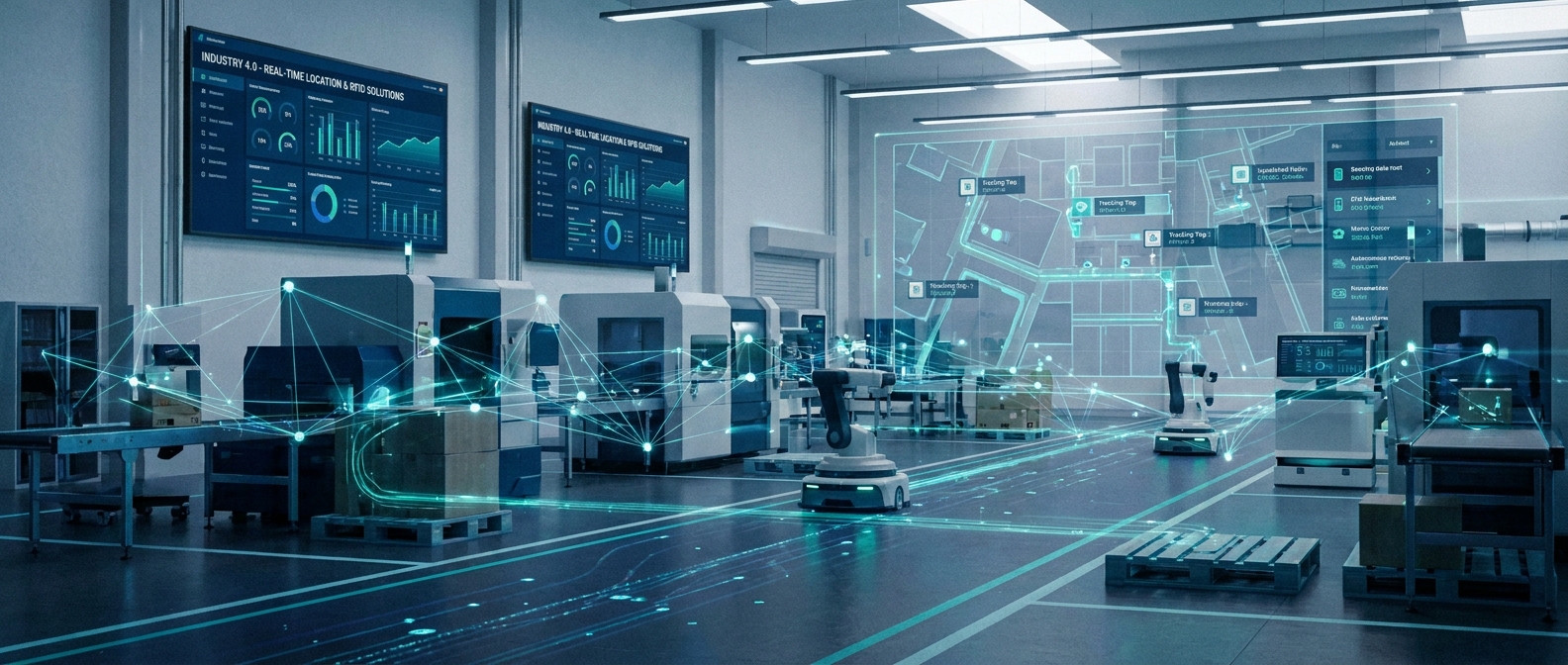
BLE RTLS components work together as an end-to-end system. First, wireless tags attach to assets or are worn by people. Second, fixed reference points (anchors) receive signals from these tags to determine their location. Finally, specialized software calculates positions and displays them on digital maps. These components can be either transmitters, receivers, or both, allowing multiple possible technology combinations.

BLE RTLS technologies vary based on application needs. Ultra-Wideband (UWB) offers high-precision tracking (3-5 cm accuracy) for safety-critical zones. Bluetooth Low Energy provides cost-effective solutions for large-scale deployments. Wi-Fi leverages existing infrastructure but typically offers lower accuracy. RFID works well for proximity-based applications rather than continuous tracking.

BLE RTLS differs significantly from GPS systems. First, RTLS focuses on indoor environments where GPS signals cannot penetrate building materials. Second, RTLS tags consume minimal power compared to GPS receivers. Third, RTLS provides more precise indoor positioning—sometimes down to centimetres—compared to GPS’s outdoor focus. Moreover, RTLS can track environmental conditions like temperature and humidity through specialised sensor tags.

Choosing the right RTLS technology

BLE RTLS selection requires balancing multiple factors to match your specific business needs. When comparing major technologies, Ultra-Wideband (UWB) delivers exceptional precision at 10-30 centimeters yet comes with higher costs of $40-120 per tag. In contrast, BLE with Angle of Arrival (AoA) technology achieves 20-50 centimeter accuracy at roughly one-third the cost of UWB.

BLE RTLS power efficiency stands out among alternatives. Tags typically operate for years on a single battery, whereas UWB devices generally last only days to weeks. This translates to lower maintenance costs for your deployment.

BLE RTLS range capabilities extend to approximately 100 meters, making it suitable for most indoor environments. For comparison, UWB reaches about 200 meters, while passive RFID typically covers only about 10 meters.

BLE RTLS infrastructure costs remain substantially lower than alternatives. A complete 1,000-unit active RFID system costs approximately $40,000 in the first year, whereas an equivalent Bluetooth infrastructure costs roughly $10,000.

BLE RTLS compatibility with existing infrastructure presents another advantage. Many WiFi access point vendors now support BLE, potentially eliminating the need for additional hardware installation.

BLE RTLS solutions excel in applications requiring room-level accuracy, including asset tracking in hospitals, indoor navigation in retail environments, and proximity marketing. Nevertheless, for situations demanding centimeter-level precision, such as surgical instrument tracking, UWB might prove more appropriate despite its higher cost

Where RTLS is used in business today

BLE RTLS applications extend across numerous industries, with healthcare facilities being primary adopters. Hospitals use these systems for asset management, enhancing patient safety through real-time tracking, and optimizing workflows. Nurses currently spend 10–25% of their time searching for other staff members, a problem these systems directly address.

BLE RTLS implementation in radiology departments has shown remarkable results, reducing average scheduling time from 12 to 5 minutes—a 58.3% improvement—along with decreasing equipment idle rates from 16% to 12%.

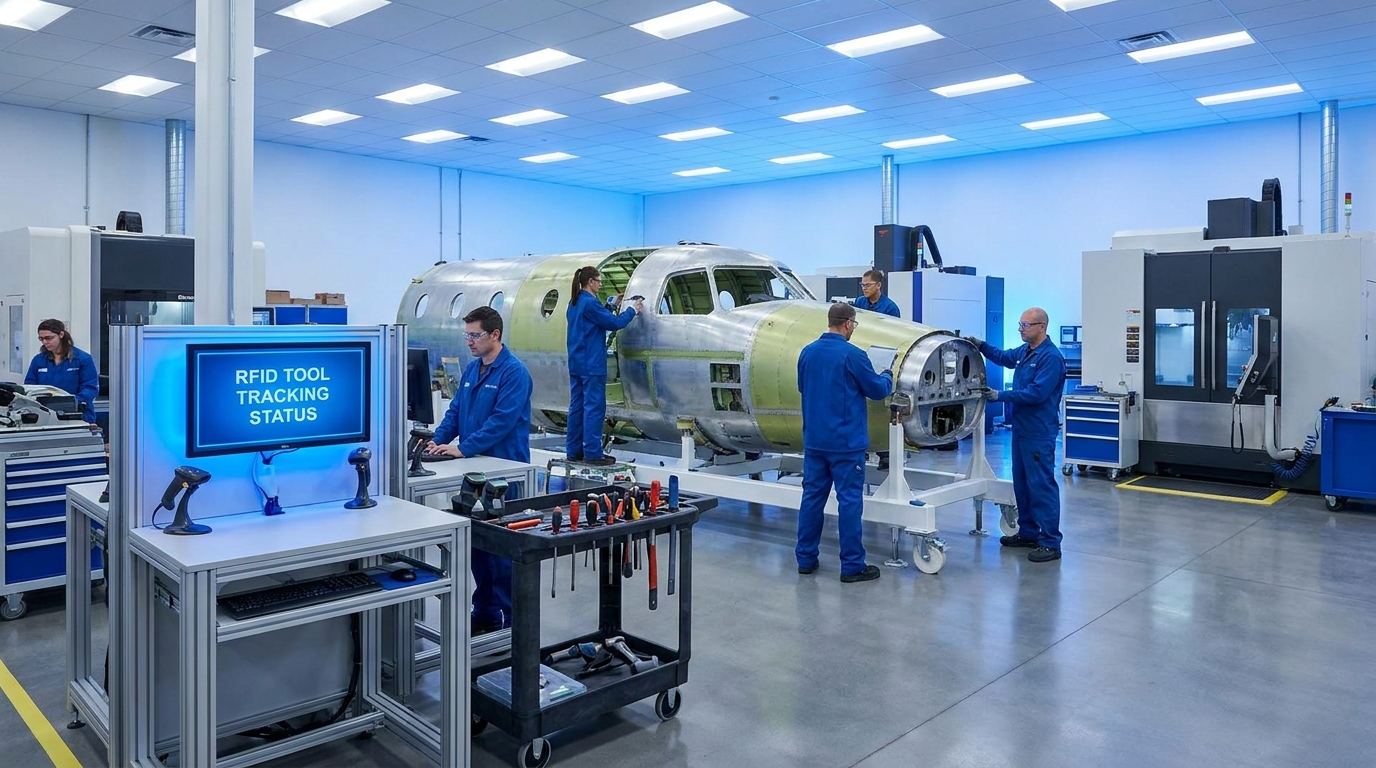
BLE RTLS transforms manufacturing operations by tracking work-in-progress items, optimizing material flows, and monitoring inventory levels. Factory workers using RTLS-tagged tools report search time reductions from 10-15 minutes to just 1 minute.

BLE RTLS enhances warehouse management through precise asset tracking, allowing companies like Volkswagen to effectively expand warehouse space by 20% simply through improved utilisation. Unplanned equipment downtime—estimated to cost industrial manufacturers $50 billion annually—is notably reduced.

BLE RTLS solutions elevate security at stadiums and events by monitoring crowd distribution, enabling efficient emergency evacuations, and allowing instant help requests. Similarly, in office environments, these systems provide valuable insights about space utilisation and enable emergency management through precise location awareness.

Conclusion

BLE RTLS technology represents a game-changing solution for businesses seeking precise indoor location tracking without breaking the bank. Throughout this guide, you’ve discovered how these systems offer remarkable accuracy at a fraction of the cost of alternatives like UWB or active RFID. Additionally, the extended battery life of BLE tags—lasting years rather than weeks—significantly reduces maintenance demands and overall operational expenses for your organisation.

BLE RTLS implementations across healthcare, manufacturing, and warehousing demonstrate the versatility and effectiveness of this technology. Notably, hospitals have reduced equipment search times by over 50%, while manufacturers report finding tools in just 1 minute instead of 15. Therefore, these tangible efficiency gains translate directly to improved productivity and cost savings, regardless of your industry. Companies like Volkswagen have effectively expanded their warehouse capacity by 20% simply through better utilization enabled by these systems.

BLE RTLS solutions continue to evolve as the global market expands toward an expected $5.8 billion by 2028. Consequently, your business stands to benefit from ongoing innovations and increasingly affordable implementation options. Since these systems integrate seamlessly with existing infrastructure—particularly WiFi access points that now commonly support BLE—you can often deploy this technology without extensive hardware overhauls, further reducing implementation barriers.

BLE RTLS adoption ultimately comes down to matching the right technology with your specific business requirements. While Ultra-Wideband might better serve applications demanding centimeter-level precision, BLE delivers the ideal balance of accuracy, cost, and efficiency for most indoor tracking needs. Above all, the proven success stories across multiple sectors confirm that these systems deliver measurable returns on investment through enhanced asset utilization, streamlined workflows, and improved safety procedures. By carefully evaluating your needs against the capabilities outlined in this guide, you can make an informed decision about implementing this powerful technology in your business operations.

Key Takeaways

RTLS systems are transforming business operations by providing real-time indoor location tracking that delivers measurable efficiency gains and cost savings across multiple industries.

BLE RTLS costs 75% less than alternatives – A 1,000-unit system costs around $10,000 versus $40,000 for active RFID, with tags lasting years on single batteries.

Proven efficiency gains across industries – Hospitals reduce equipment search time by 58%, manufacturers cut tool finding from 15 minutes to 1 minute, and warehouses expand capacity 20%.

Room-level accuracy meets most business needs – BLE with AoA technology achieves 20-50cm precision, sufficient for asset tracking, workflow optimisation, and safety monitoring.

Seamless integration with existing infrastructure – Many WiFi access points now support BLE, eliminating the need for extensive hardware overhauls during implementation.

Market growth signals strong ROI potential – The global RTLS market is expanding from $2.0 billion in 2023 to $5.8 billion by 2028, driven by proven business value.

The key is matching technology capabilities to your specific requirements. While UWB offers centimetre precision for critical applications, BLE RTLS provides the optimal balance of accuracy, cost-effectiveness, and operational efficiency for most indoor tracking needs.

FAQs

Q1. How does RTLS differ from GPS? RTLS is primarily used for indoor tracking with high accuracy in confined spaces, while GPS is designed for outdoor location tracking over large areas. RTLS can provide precise positioning indoors where GPS signals are ineffective.

Q2. What is the typical accuracy of BLE RTLS systems? BLE RTLS systems with Angle of Arrival (AoA) technology can achieve accuracy between 20-50 centimeters. This level of precision is suitable for most indoor tracking needs, including asset management and personnel monitoring.

Q3. How long do BLE RTLS tags typically last? BLE RTLS tags are highly energy-efficient and can operate for years on a single battery. This extended battery life significantly reduces maintenance requirements and operational costs compared to other technologies.

Q4. In which industries is RTLS commonly used? RTLS is widely used in healthcare for asset tracking and patient safety, in manufacturing for optimizing workflows and enhancing worker safety, in warehouses for real-time inventory management, and in offices and venues for space utilization and crowd control.

Q5. What are the cost benefits of implementing BLE RTLS? BLE RTLS systems are considerably more cost-effective than alternatives. A 1,000-unit BLE RTLS system costs approximately $10,000, which is about 75% less than an equivalent active RFID system. Additionally, BLE RTLS can often leverage existing WiFi infrastructure, further reducing implementation costs.

Ready to Transform Your Business?

Take the first step towards unlocking your business’s full potential. Contact us today to explore how our Business Strategy Consulting services can propel your organization towards new heights of success.
Need Help?